From the Back of a Maths Book to Amazon.
Most children who love comics have one character they have drawn a hundred times in the back of a maths book. Almost none of them ever turn it into a book. Drawing a character is easy. Finishing a whole comic is hard, and nobody ever shows a child how. That is what we teach.
₹14,990 for pages in the shared book, ₹65,990 for a book of their own.
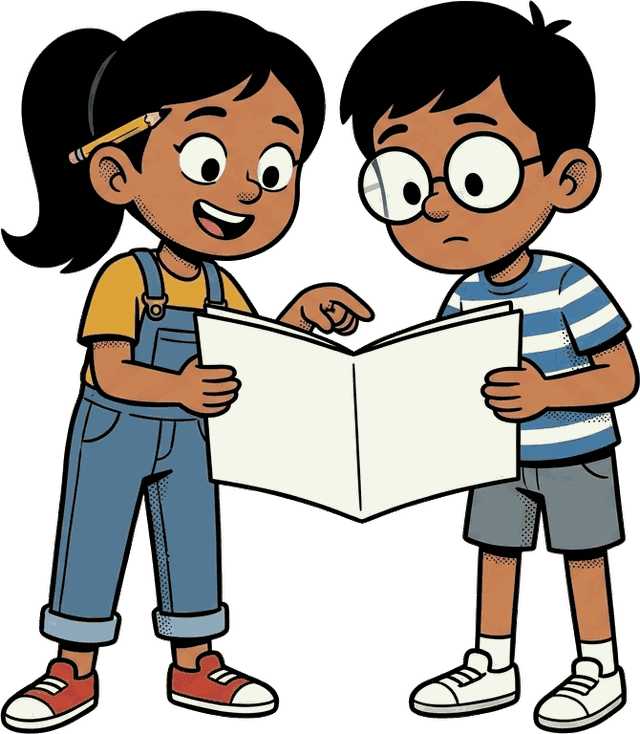 I made this.
Dav Pilkey. He could not sit still in class, so they put a desk for him out in the corridor. That is where he invented Captain Underpants. Second grade.
Siegel and Shuster. Two seventeen year olds invented Superman, then signed the rights away for about 130 dollars, because nobody had told them what it was worth.
How old is your child?
Every child in this group is older than Pilkey was and younger than the boys who made Superman. They were not born better at drawing than your child. They just had a way to finish, and that is the part we teach.
Every session, they finish a real part of the book.
Nothing here is practice. In session two they draw their characters. In session four they write what happens on every page. In session five they sketch the whole book. Those are the three big decisions in any comic, and only your child can make them. Once they have, our artists can start.
We ink, we never redraw.
Inking means we clean your child's own line, colour it and set it on the page. We do not replace their drawing with a studio version. If their dog looks a bit funny, the printed dog looks a bit funny, because it is their dog.
Children who started exactly here are on Amazon today.
- young authors
- 57young authors


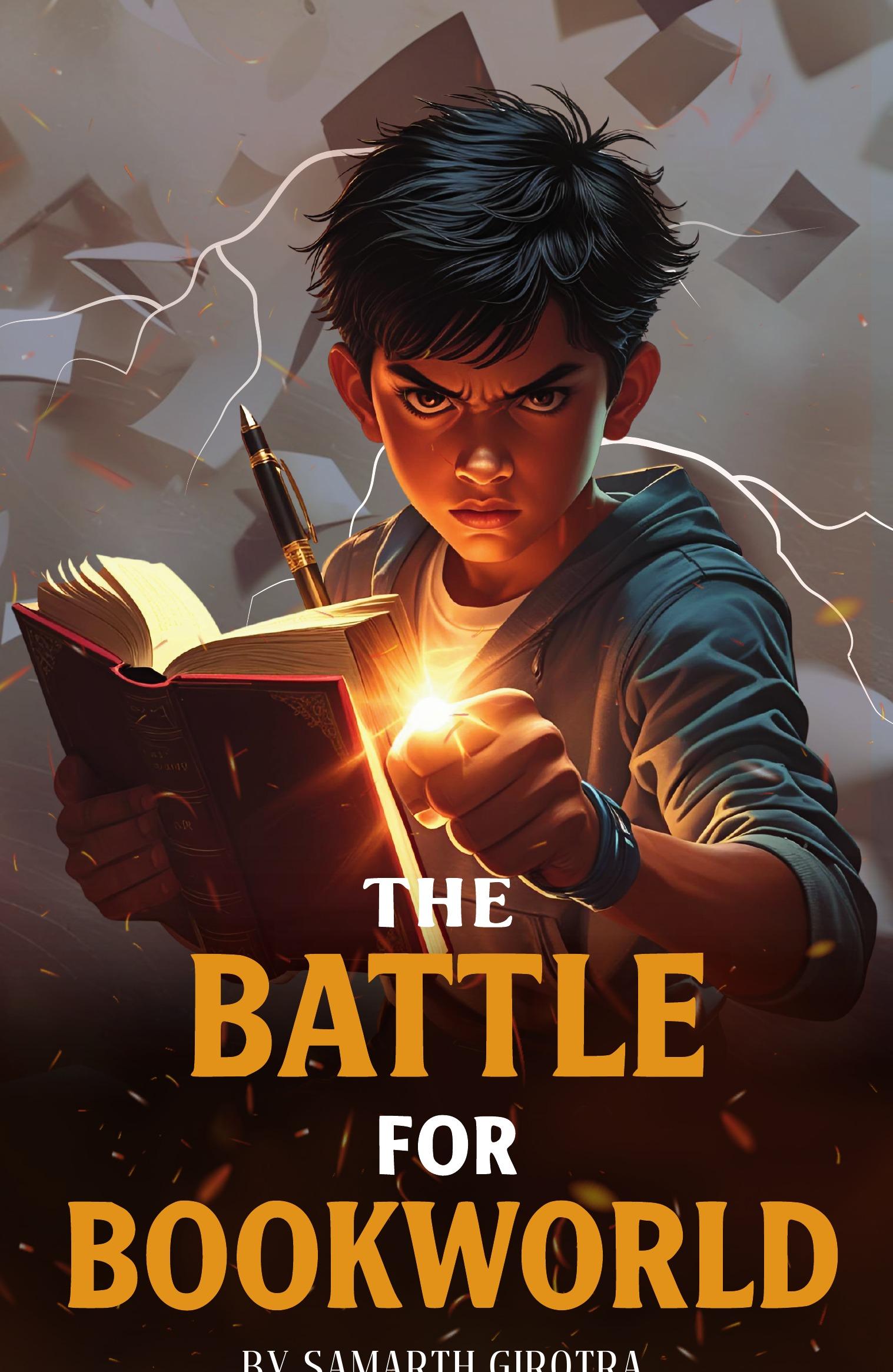

15 books live on Amazon. Tap any cover to read it.
This is the kind of book they end up with.
One being made here right now
Real pages from a comic a child is making here right now, off the printer's file. We have left her name off until her book comes out. Tap to read the pages.
Same six sessions either way. The only difference is what book they end up in.
Read down both lists. They are the same until the last few lines. That is the point: your child is taught exactly the same thing whichever you pick.
Comic Anthology
₹14,990- 6 live sessions of 60 minutes, one a week
- Only 4 to 5 children in the session
- 2 extra sessions, just your child and their teacher
- The Panel Book, our 40 page comic workbook
- We ink, we never redraw
- Printed in colour, as a real book you can buy
- 4 to 6 pages that are theirs, in the Bukmuk Comic Anthology
- One colour book, shared with 8 to 10 other children
- Named as one of the authors on Amazon
- 2 copies posted to you
Solo Comic
₹65,990- 6 live sessions of 60 minutes, one a week
- Only 4 to 5 children in the session
- 2 extra sessions, just your child and their teacher
- The Panel Book, our 40 page comic workbook
- We ink, we never redraw
- Printed in colour, as a real book you can buy
- A whole book of their own, 24 to 32 pages
- Their own cover, and their own ISBN
- The only author on Amazon
- They earn 5% of the price of every copy sold
- 2 copies posted to you
Start with the anthology. Do the sessions, get a printed comic, and then decide about a book of their own once you have seen your child do it. If you want to add one later it costs ₹58,490 instead of ₹65,990, because you have already paid for the sessions. You can decide any time while the sessions are running, and for 60 days after the book arrives. Their pages still go in the shared book, so they end up with two books.
What happens in each session.
One session a week. Each one teaches a piece of how comics are made, and ends with your child holding a real part of their own book. The bar shows how much of the book exists by the end of it.
- Session One
How comics work
1 of 6 parts of the book doneThey learn: How comics really work. Panels, the gap between them, and why your brain fills that gap in on its own. Plus a quick tour of comics, from 1837 to Amar Chitra Katha to Diary of a Wimpy Kid.
By the end they canExplain why a comic is not just a story with pictures stuck on it
And they finishTheir story in one sentence, and how they want it to look
- Session Two
Draw your characters
2 of 6 parts of the book doneThey learn: How to design a character simple enough to draw again and again. A short comic means drawing the same face dozens of times. A whole book means about 400. Simple is the professional choice, not the lazy one.
By the end they canDraw their main character twice, from memory, and have it still look like the same person
And they finishDrawings of everyone in their story, from the front and the side, with the faces they pull
- Session Three
Something goes wrong
3 of 6 parts of the book doneThey learn: Story. What their hero wants, what they are afraid of, and the three things that go wrong on the way. The rule that does most of the work: the want has to be something you can draw. Wants to be happy cannot be drawn. Wants the window seat can.
By the end they canSay what their hero wants in a way you could actually draw
And they finishThe shape of their story, in five moments, across their pages
- Session Four
Write the words
4 of 6 parts of the book doneThey learn: Speech bubbles, captions and sound effects. How many words fit in a bubble, which is about twelve. Why the person on the left always speaks first, and why bubble tails must never cross.
By the end they canWrite a page of comic dialogue a reader can follow without getting lost
And they finishTheir story written out page by page: who is in it, what happens, who says what
- Session Five
Sketch every page
5 of 6 parts of the book doneThey learn: Where the camera looks. Wide, middle, close up, and how the same moment changes meaning at each distance. Why a surprise can only work on a right hand page. How to sketch a whole page in sixty seconds.
By the end they canPlan a page before drawing it, instead of drawing it and hoping
And they finishA rough sketch of every page, plus notes for our artists. This is also where we settle how many pages the story needs
- Session Six
Cover and title
6 of 6 parts of the book doneThey learn: The cover as a promise. How a title earns its place, the dedication, and the page about them at the back. Then exactly what happens next.
By the end they canPitch their own comic to a stranger in thirty seconds
And they finishTheir title, their cover idea, and the page about them at the back. Then it goes to print
After the sixth session the story is finished, not started. What is left is the drawing, and that is what the two one to one sessions are for.
60 minutes a session
One a week, live online, with 4 to 5 children.
2 one to one sessions
Just your child and their teacher, to finish the drawings.
The Panel Book
A 40 page workbook we wrote for this course.
What happens, in order.
- 01 · The six sessions
They build the book as they go. Every session, they finish one part of it, so by the last one the story is done, not just started.
- 02 · Two sessions on their own
Time on their own with their teacher to finish the drawings, now that the story is settled and they know exactly what to draw.
- 03 · Drawings due
The one date we hold you to. The anthology is one book shared by several children, so if one is late, everybody waits.
- 04 · We turn it into a book
We ink and colour every page, set the words in place, check the spelling and design the cover.
- 05 · It goes on sale
The book gets an ISBN and goes on sale on Amazon.in and Amazon.com. Two copies come to your door, with a certificate and a page about your child on our site.
We have not fixed a day or time yet. There are only four or five children in a session, so we set it around the families who join. Tell us what suits you on the form.
Book your child's place.
Only four to five children in a session, so places go quickly. We message you on WhatsApp within 24 hours to agree a day and time.
5 of 5 places leftBefore you decide.
My child cannot really draw. Is this for them?
Yes. We ink, we never redraw. That means we clean their own line, colour it and set it on the page, rather than replacing it with a studio version. If their dog looks a bit funny, the printed dog looks a bit funny, because it is their dog. Two of the biggest children's comic authors in the world, Raina Telgemeier and Jeff Kinney, draw simply on purpose. What we teach is the hard part: how to finish.
What day and time are the sessions?
We have not fixed them yet. There are only four or five children in a session, so we set the day and time around the families who join. That is why the form asks which times suit you. We confirm on WhatsApp once the group is full.
Which one should we pick?
Start with the anthology. Most families do, and it is what we would suggest. Do the sessions, get a printed comic, and then decide about a book of their own once you have seen your child do it.
Can we add a book of their own later?
Yes. It costs ₹58,490 instead of ₹65,990, because you have already paid for the sessions. You can decide any time while the sessions are running, and for 60 days after the book arrives. Their pages still go in the shared book, so they end up with two books. Just tell us and we will sort it out.
How does payment work?
One payment, in full, before the first session. We do not do instalments or part payments. If you add a book of their own later, that is paid before we start work on it.
What if my child misses a session?
Tell us and we will work around it. Every session finishes one part of the book, so nothing gets skipped, they just catch it up. The two one to one sessions are usually where we do that.
Is my child the right age?
The sessions are for ages 9 to 16. Dav Pilkey invented Captain Underpants at 8. The two boys who invented Superman were 17. Every child in this group is somewhere in between.
That character in the back of the maths book deserves a cover.
Comic Studio, ages 9 to 16. From ₹14,990.
Got a story brewing?
Drop us a message and we'll reply within 24 hours. Often much sooner.